

 Image 1 of 1
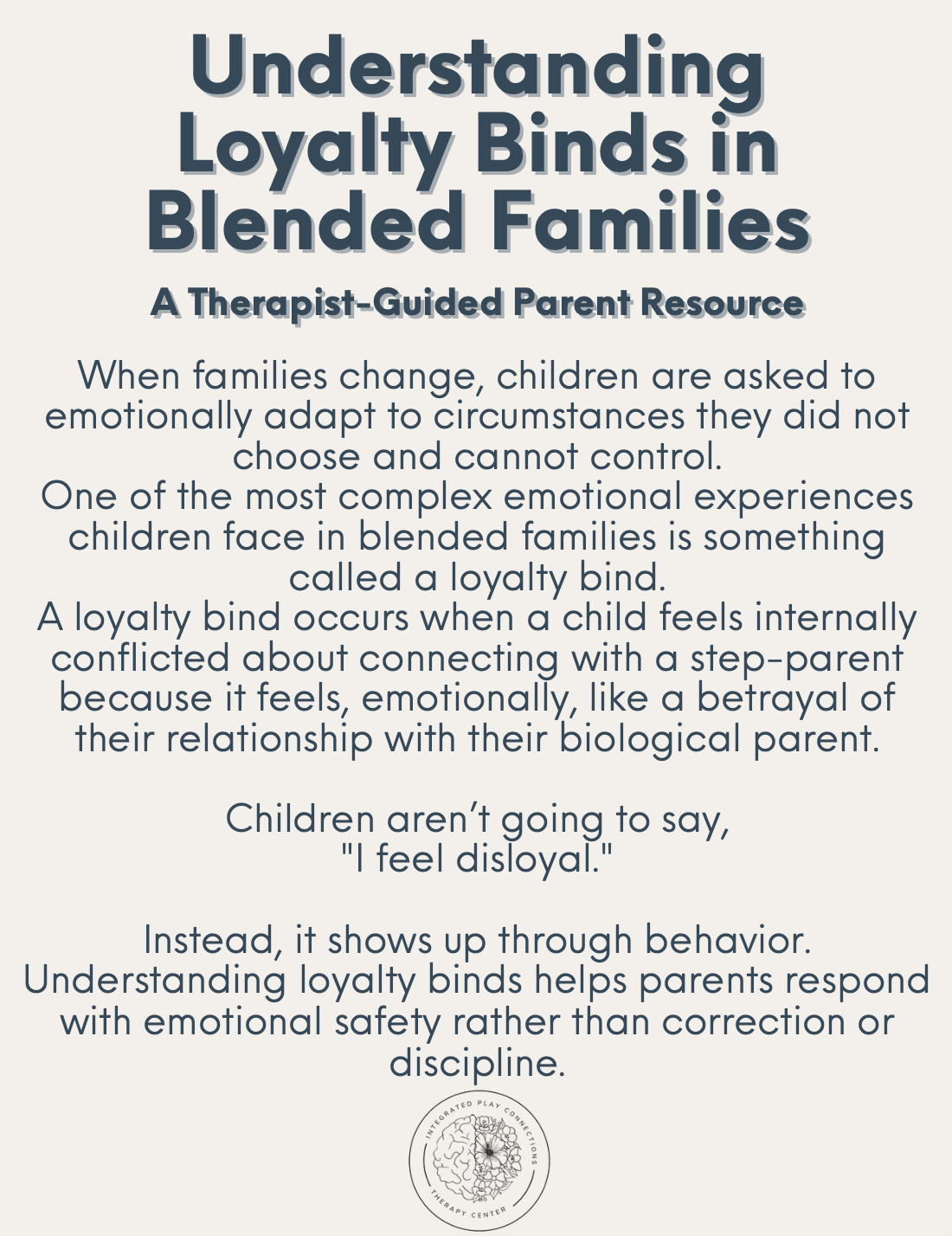
A loyalty bind occurs when a child feels emotionally conflicted about connecting with a step-parent because it feels, internally, like betrayal.
Children rarely say, “I feel disloyal.”
Instead, loyalty binds show up through withdrawal, resistance, irritability, and emotional distance.
This therapist-guided resource helps parents:
• Understand what loyalty binds are
• Recognize how they show up behaviorally
• Reduce emotional pressure
• Increase emotional safety
• Respond without personalizing the child’s distance
Includes reflection exercises and repair statements that decrease internal pressure and strengthen attachment security.
This guide helps parents move from correction to understanding.
11-page printable PDF.
A loyalty bind occurs when a child feels emotionally conflicted about connecting with a step-parent because it feels, internally, like betrayal.
Children rarely say, “I feel disloyal.”
Instead, loyalty binds show up through withdrawal, resistance, irritability, and emotional distance.
This therapist-guided resource helps parents:
• Understand what loyalty binds are
• Recognize how they show up behaviorally
• Reduce emotional pressure
• Increase emotional safety
• Respond without personalizing the child’s distance
Includes reflection exercises and repair statements that decrease internal pressure and strengthen attachment security.
This guide helps parents move from correction to understanding.
11-page printable PDF.