

 Image 1 of 1
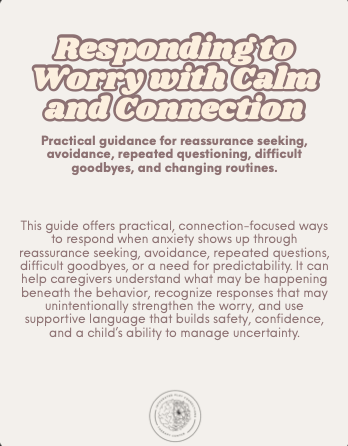
Caregivers naturally want to help when a child feels anxious. Sometimes, however, repeated reassurance, avoidance, excessive questioning, changing routines, or prolonged goodbyes can unintentionally make worry feel more powerful over time.
This in-depth professional guide helps therapists support caregivers in responding to anxiety with warmth, clarity, predictability, and confidence.
Topics include:
• Reassurance seeking
• Avoidance
• Repeated and excessive questioning
• Rushed or prolonged goodbyes
• Inconsistent and changing routines
Each section includes:
• What caregivers may notice
• What may be happening beneath the behavior
• Responses that may unintentionally strengthen worry
• Helpful caregiver language
• Connection-focused next steps
• Reflection and consultation prompts
This resource can be used during caregiver consultations, referenced when preparing for sessions, or used to develop individualized support plans.
Instant digital download.
Caregivers naturally want to help when a child feels anxious. Sometimes, however, repeated reassurance, avoidance, excessive questioning, changing routines, or prolonged goodbyes can unintentionally make worry feel more powerful over time.
This in-depth professional guide helps therapists support caregivers in responding to anxiety with warmth, clarity, predictability, and confidence.
Topics include:
• Reassurance seeking
• Avoidance
• Repeated and excessive questioning
• Rushed or prolonged goodbyes
• Inconsistent and changing routines
Each section includes:
• What caregivers may notice
• What may be happening beneath the behavior
• Responses that may unintentionally strengthen worry
• Helpful caregiver language
• Connection-focused next steps
• Reflection and consultation prompts
This resource can be used during caregiver consultations, referenced when preparing for sessions, or used to develop individualized support plans.
Instant digital download.