

 Image 1 of 1
School transitions can bring changes in behavior, emotions, sleep, routines, and a child’s need for connection. Even children who feel excited about school may struggle with uncertainty, separation, new expectations, sensory demands, or the effort required to manage a full school day.
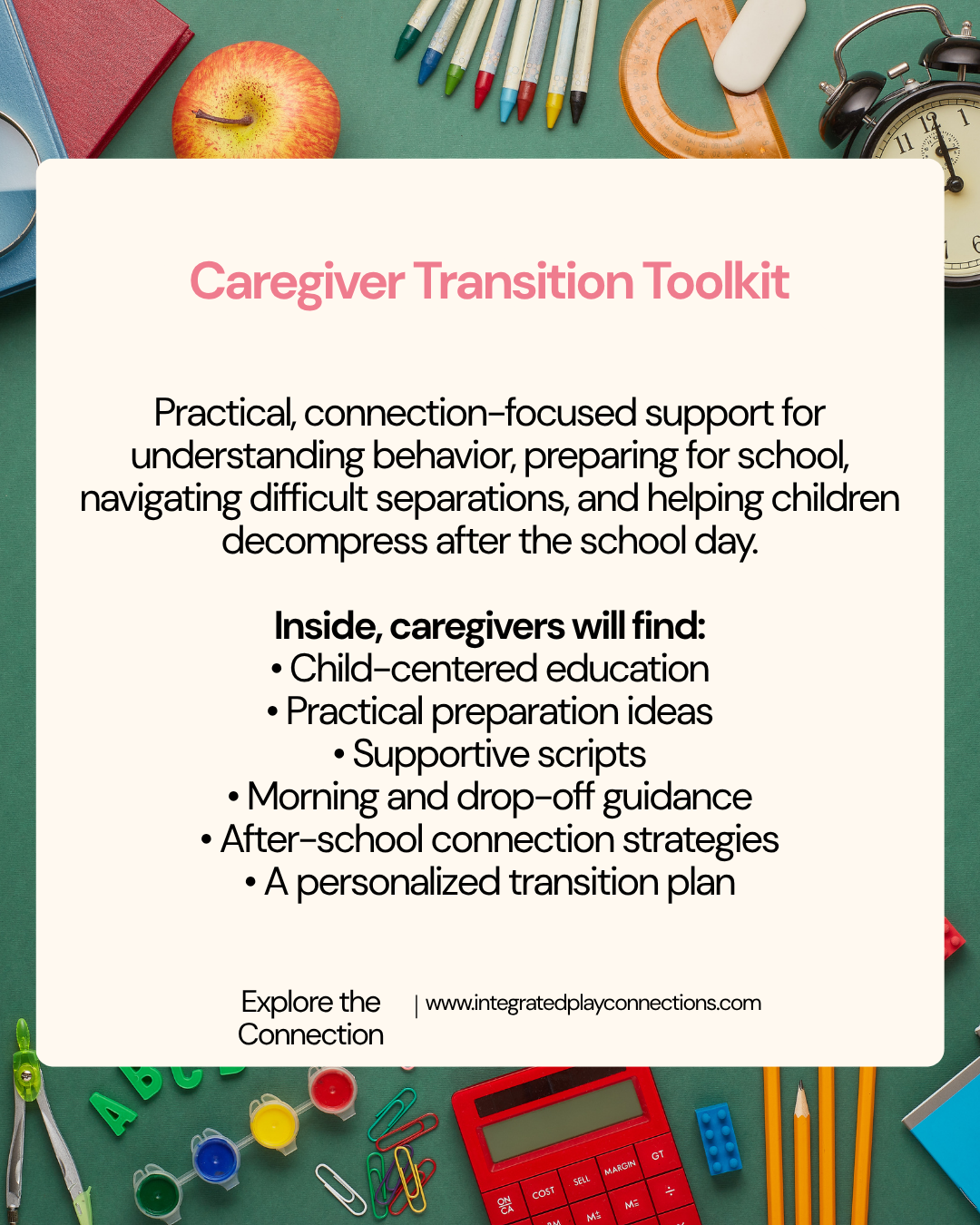
The Caregiver School Transition Toolkit provides practical, connection-focused support for understanding what may be happening beneath the behavior, preparing for school without increasing pressure, navigating difficult mornings and separations, and helping children decompress once they return home.
This toolkit includes:
• Why Back-to-School Transitions Affect Behavior
An introduction to how changes in routine, separation, sensory demands, social expectations, and uncertainty may show up through behavior.
• What Your Child May Be Communicating
A visual guide connecting common transition behaviors with what the child may be trying to communicate and supportive ways to respond.
• Supporting School Feelings Through Play
Guidance for noticing themes of separation, belonging, control, competence, and uncertainty without directing or overinterpreting the child’s play.
• Creating Predictability Before School Starts
Practical preparation ideas, including school visits, visual supports, countdowns, routine practice, and gradual exposure to upcoming changes.
• My Child’s School Transition Plan
A printable worksheet for identifying routines, stress signals, calming supports, connection rituals, and helpful caregiver language.
• Connection-Focused Morning and Drop-Off Support
Brief rituals, predictable goodbye routines, transitional objects, and supportive language for difficult separations.
• Helping Your Child Decompress After School
An explanation of after-school meltdowns with low-pressure strategies for supporting regulation, rest, and reconnection.
• Low-Pressure Ways to Talk About School
Alternatives to “How was your day?” with specific, play-based, and connection-focused ways to invite communication.
• Caregiver Scripts for School Transitions
Supportive language for anxiety, school refusal, frustration, sadness, separation, perfectionism, and repeated reassurance seeking.
• When Your Child May Need Additional Support
Signs that communication with the school or support from a mental health professional may be helpful.
• Responding to Worry With Calm and Connection
A comprehensive 25-page guide addressing reassurance seeking, avoidance, excessive questioning, rushed or prolonged goodbyes, and inconsistent routines.
This collection is grounded in the understanding that behavior is communication. The goal is not to remove every difficult feeling, but to help children feel understood, connected, and increasingly capable of moving through the transition.
Ideal for caregivers supporting children who are beginning school, returning after a break, changing classrooms, entering a new school, or experiencing school-related anxiety.
Instant digital download. No physical product will be mailed.
School transitions can bring changes in behavior, emotions, sleep, routines, and a child’s need for connection. Even children who feel excited about school may struggle with uncertainty, separation, new expectations, sensory demands, or the effort required to manage a full school day.
The Caregiver School Transition Toolkit provides practical, connection-focused support for understanding what may be happening beneath the behavior, preparing for school without increasing pressure, navigating difficult mornings and separations, and helping children decompress once they return home.
This toolkit includes:
• Why Back-to-School Transitions Affect Behavior
An introduction to how changes in routine, separation, sensory demands, social expectations, and uncertainty may show up through behavior.
• What Your Child May Be Communicating
A visual guide connecting common transition behaviors with what the child may be trying to communicate and supportive ways to respond.
• Supporting School Feelings Through Play
Guidance for noticing themes of separation, belonging, control, competence, and uncertainty without directing or overinterpreting the child’s play.
• Creating Predictability Before School Starts
Practical preparation ideas, including school visits, visual supports, countdowns, routine practice, and gradual exposure to upcoming changes.
• My Child’s School Transition Plan
A printable worksheet for identifying routines, stress signals, calming supports, connection rituals, and helpful caregiver language.
• Connection-Focused Morning and Drop-Off Support
Brief rituals, predictable goodbye routines, transitional objects, and supportive language for difficult separations.
• Helping Your Child Decompress After School
An explanation of after-school meltdowns with low-pressure strategies for supporting regulation, rest, and reconnection.
• Low-Pressure Ways to Talk About School
Alternatives to “How was your day?” with specific, play-based, and connection-focused ways to invite communication.
• Caregiver Scripts for School Transitions
Supportive language for anxiety, school refusal, frustration, sadness, separation, perfectionism, and repeated reassurance seeking.
• When Your Child May Need Additional Support
Signs that communication with the school or support from a mental health professional may be helpful.
• Responding to Worry With Calm and Connection
A comprehensive 25-page guide addressing reassurance seeking, avoidance, excessive questioning, rushed or prolonged goodbyes, and inconsistent routines.
This collection is grounded in the understanding that behavior is communication. The goal is not to remove every difficult feeling, but to help children feel understood, connected, and increasingly capable of moving through the transition.
Ideal for caregivers supporting children who are beginning school, returning after a break, changing classrooms, entering a new school, or experiencing school-related anxiety.
Instant digital download. No physical product will be mailed.