Back-to-School Anxiety: Helping Children Navigate Big Feelings
By: Michelle Walker, LCSW, RPT-S
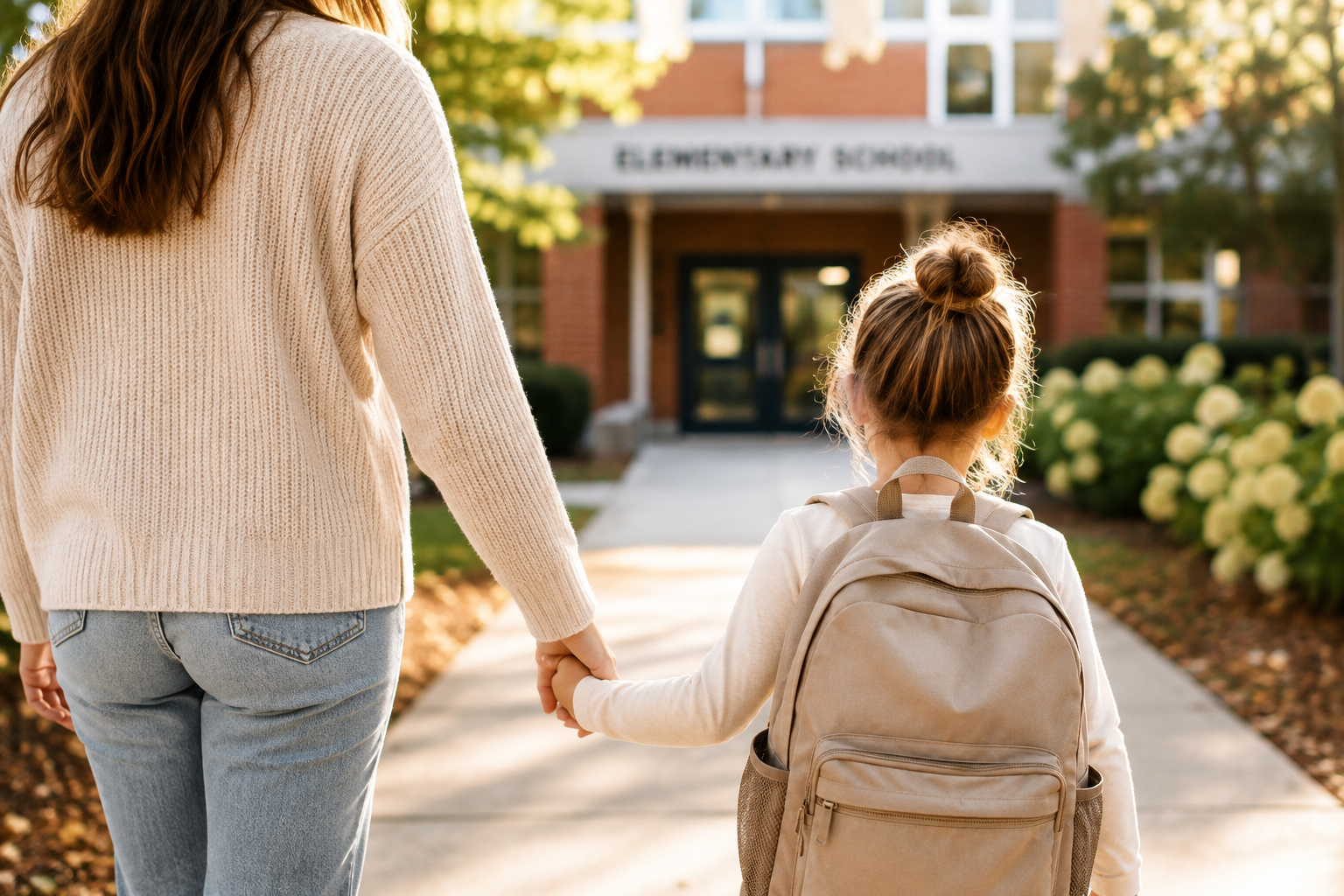
Back-to-school season is filled with big emotions.
For many children, it is an exciting time filled with new teachers, fun school supplies, seeing friends again, and the anticipation of new experiences. At the very same time, it can also bring worry, uncertainty, and anxiety. Whether your child is entering preschool for the first time, starting kindergarten, transitioning to a new school, or simply returning to a familiar classroom, these emotional experiences often exist side-by-side.
And, if we’re honest, parents experience these feelings too.
You may feel excitement about returning to routines, relief that chaotic summer schedules are ending, sadness that your little one is growing up, and maybe even guilt for feeling relieved. Mixed emotions are part of being human. Even as adults with years of experience identifying and regulating emotions, it can still catch us off guard.
Children experience this too, but they don’t have the vocabulary, life experience, or brain development to make sense of what they’re feeling.
Mixed Feelings Are Normal
Children often believe they should only feel one emotion at a time.
“I love school… So, why do I feel scared?”
“I’m excited to see my friends… So, why do I want to stay home?”
Developmental research shows that children are still learning emotional awareness and emotional literacy. Their brains are developing the ability to recognize, organize, and communicate internal experiences. The prefrontal cortex, the part of the brain responsible for emotional regulation, reasoning, and flexible thinking, continues developing well into early adulthood. In moments of stress or transition, children often need a trusted adult to help organize experiences that feel confusing inside.
This process is called co-regulation.
Rather than trying to eliminate difficult emotions, our role becomes helping children understand that many feelings can coexist.
“You can be excited and nervous.”
“You can miss me and have fun at school.”
“You can feel worried and still be brave.”
Validation Doesn’t Create Feelings, It Organizes Them
One of the biggest misconceptions parents share with us is:
“If I say my child is nervous, won’t I make them feel nervous?”
Research actually suggests the opposite.
Research on emotion and affect labeling consistently shows that helping children identify and name their emotions can, over time, reduce the intensity of their emotions, strengthen their ability to regulate themselves, and deepen their understanding of their internal experiences. As children develop a stronger emotional vocabulary, they become more likely to express their feelings with words rather than through behavior. When a child feels understood, their nervous system begins to settle because a trusted adult is helping make sense of what may feel confusing or overwhelming inside. Over time, this process supports emotional awareness, resilience, and a stronger sense of self.
Validation is not always about agreeing, but rather communicating:
“I see your experience.”
So, instead of saying:
“There’s nothing to worry about.”
Try:
“You’re wondering what today will be like.” “Knowing what to expect will help you feel better about it; let’s talk about it.”
Or:
“It seems like saying goodbye feels really hard today.”
Or even:
“You’re excited about school, and also wish we could stay together.”
Simple reflections like these help children feel seen, heard, and understood. This allows emotions to move through more quickly because children no longer have to work so hard to communicate them.
The Goal Isn’t to Eliminate Anxiety
Many parents search for the perfect strategy that will make separation tears disappear.
The truth is…There isn’t one.
No activity or goodbye routine is “magic.”
The real work happens underneath the behavior.
Children aren’t just learning how to separate.
They’re learning whether they can tolerate uncomfortable emotions and whether the adults they trust believe they are capable of doing hard things.
Your consistent message matters far more than any activity.
When you confidently communicate:
“I know this feels hard.”
“I know you can do hard things.”
“I will always come back.”
…your child slowly begins borrowing your confidence until it becomes their own.
This doesn’t mean there won’t be tears.
It means the tears no longer become something to fear.
Bringing the Message Home
While activities don’t replace emotional support, they can serve as beautiful reminders of the message you’re consistently sending.
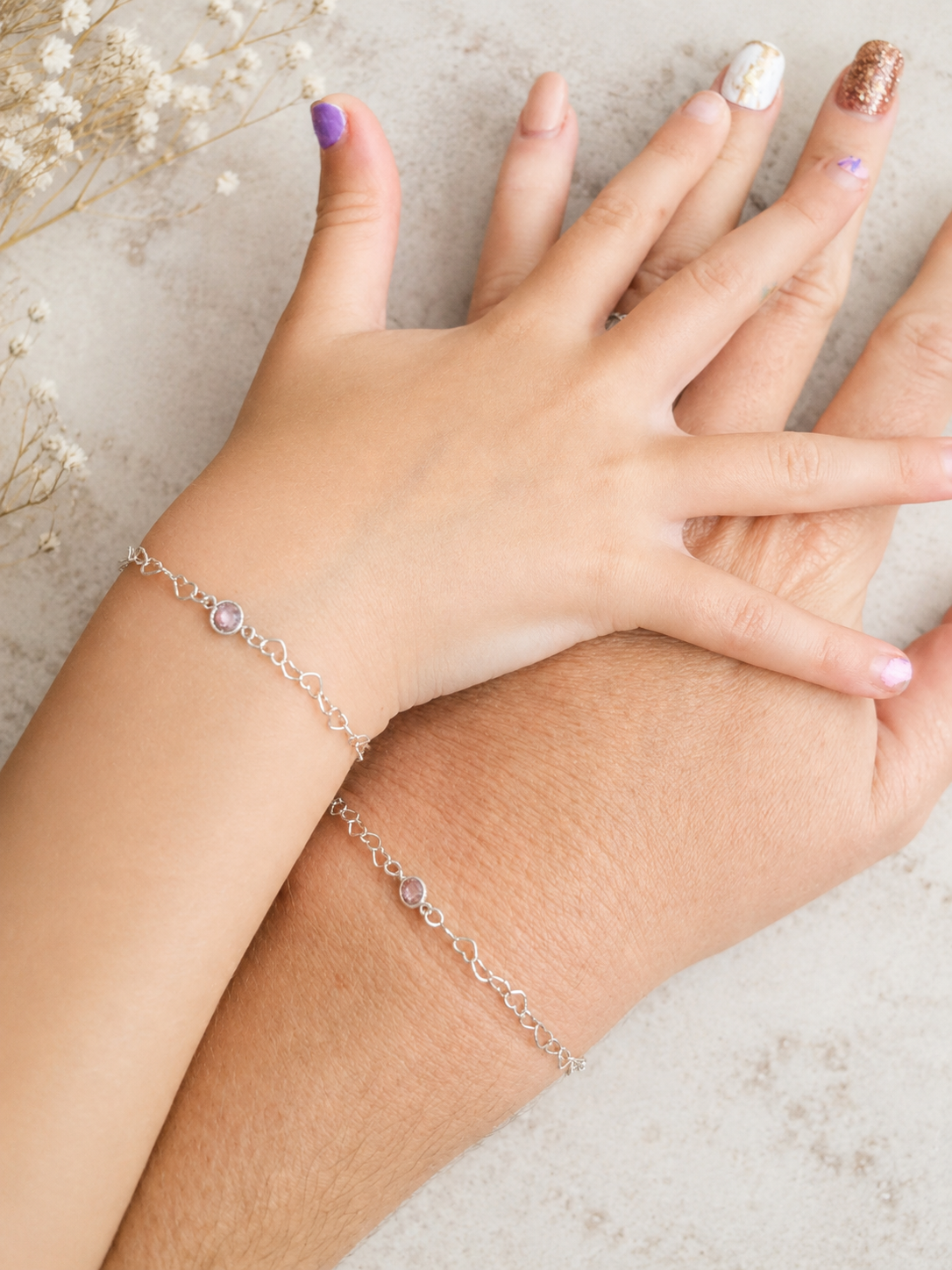
One idea our family loved this year was matching permanent bracelets.
My daughter and I each picked one together. We talked about how these bracelets were different from other jewelry because they were made to stay.
I told her, “These bracelets remind us that our love is permanent too. Even when we’re apart during the day, we’re still connected.”
The bracelet doesn’t make separation anxiety disappear.
It simply becomes a tangible reminder of something much bigger:
Connection doesn’t end when distance begins.
This idea is rooted in attachment theory. Developmental psychologist John Bowlby described how children gradually develop an internal working model of their caregiver, a secure inner representation that allows them to feel emotionally connected, even when physically separated. Over time, children internalize the message:
“My caregiver leaves… and they always come back.”
Sometimes a small symbolic object can help bridge that growing confidence.
Whether it’s matching bracelets, a tiny heart drawn on each other’s hands, matching keychains, a family photo tucked into a backpack, or another meaningful ritual, the object itself isn’t where the security comes from.
The relationship is.
A Final Thought
As parents, we naturally want to make difficult feelings disappear. But what if our goal wasn’t to erase them?
What if our goal was to help our children discover that they are capable of experiencing difficult feelings without being overwhelmed by them?
Back-to-school season isn’t simply about learning letters, numbers, or classroom routines.
It’s also an opportunity for children to develop emotional resilience.
Every goodbye that ends with a joyful reunion teaches:
“I can miss someone and still be okay.”
“I can feel scared and still be brave.”
“I can do hard things.”
And perhaps the most important message of all:
Love doesn’t disappear just because we’re apart.
References
Bowlby, J. (1988). A Secure Base: Parent-Child Attachment and Healthy Human Development. Basic Books.
Bratton, S. C., & Landreth, G. L. (2020). Child Parent Relationship Therapy (CPRT) Treatment Manual: An Evidence-Based 10-Session Filial Therapy Model (2nd ed.). Routledge.
Denham, S. A. (2006). Social-emotional competence as support for school readiness. Early Education and Development, 17(1), 57–89.
Gottman, J. M., Katz, L. F., & Hooven, C. (1997). Meta-Emotion: How Families Communicate Emotionally. Lawrence Erlbaum Associates.
Lieberman, M. D., et al. (2007). Putting feelings into words: Affect labeling disrupts amygdala activity in response to emotional stimuli. Psychological Science, 18(5), 421–428.
Siegel, D. J., & Bryson, T. P. (2011). The Whole-Brain Child. Delacorte Press.