Why Therapists Must Keep Learning: The Role of Books in Trauma-Informed, Relational Therapy
By: Holly Dudley, MA, Resident in Counseling
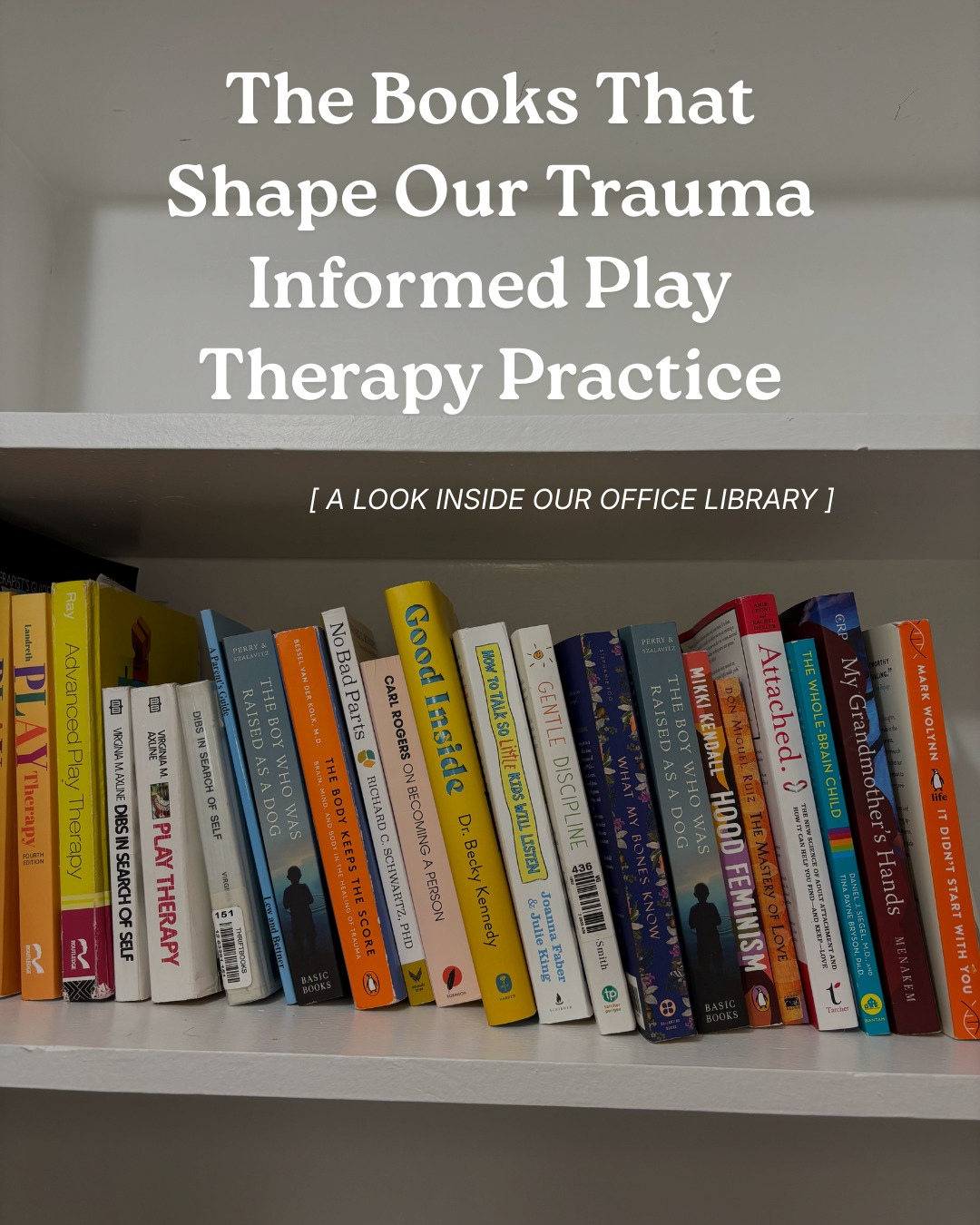
Therapy is not a static profession. It calls us to keep learning, questioning, and deepening our understanding long after our degrees are earned. One of the most tangible ways we live that out in our practice is through the books that fill our shelves. They shape our clinical thinking, ground us in theory and research, and also serve as trusted resources we can thoughtfully recommend to parents and older clients when additional insight or support may be helpful.
These books have shaped how we understand trauma, attachment, nervous systems, relationships, and the broader cultural and societal contexts that influence mental health.
Understanding how trauma affects the brain and nervous system
Bruce Perry’s The Boy Who Was Raised as a Dog provides critical insight into how trauma affects the developing brain and nervous system, especially in children. Through clinical examples, he illustrates how early experiences of fear, neglect, and disrupted attachment shape a child’s ability to regulate emotions, interpret safety, and form relationships. His work reinforces that many trauma-related behaviors are adaptive survival responses rather than intentional misbehavior. One of the most important takeaways from this book is the emphasis on regulation and relationship as the foundation for healing. Because trauma impacts the nervous system, children cannot simply “think” their way out of these responses; they must experience consistent, attuned relationships that help restore a sense of safety. This perspective has been foundational in shaping trauma-informed and play therapy approaches and reinforces that healing begins with safety, connection, and understanding. https://amzn.to/46nzUPJ
Stephanie Foo’s What My Bones Know offers a personal and deeply informative account of living with complex trauma, highlighting how trauma affects identity, relationships, and the nervous system over time. Her writing provides a powerful perspective on what it feels like to come to terms with Complex PTSD and unaddressed childhood wounds. It offers insight not only into the clinical aspects of trauma, but also into the lived emotional experience of healing, which is essential for therapists to understand as we support clients in their own process. https://a.co/d/0cNzRo9C
Understanding intergenerational, cultural, and embodied trauma
Resmaa Menakem’s My Grandmother’s Hands expands the understanding of trauma by emphasizing that trauma lives not only in the mind, but in the body and nervous system, and can be carried across generations. His work is especially important in highlighting the impact of racialized trauma and how historical and ongoing systemic oppression can shape physiological stress responses, safety, and relational patterns. Menakem challenges therapists to move beyond purely cognitive approaches and recognize the role of the body in both survival and healing. He also reinforces the importance of cultural humility, reminding therapists that trauma cannot be fully understood without acknowledging social, historical, and racial context. This perspective has deepened my awareness of the importance of supporting nervous system safety and approaching trauma work with greater cultural awareness and sensitivity. https://amzn.to/4anVyUT
Mark Wolynn’s It Didn’t Start With You focuses on the intergenerational transmission of trauma and how unresolved experiences can influence emotional responses, beliefs, and relational patterns across generations. His work helps explain why individuals may carry anxiety, fear, or shame that does not seem fully connected to their own lived experiences, and highlights how these patterns often exist outside of conscious awareness. This perspective is particularly important when working with children and families, as it reinforces that present-day struggles are often rooted in broader relational and generational histories. His work encourages therapists to approach these patterns with curiosity and compassion rather than blame, supporting a trauma-informed understanding that healing often involves bringing awareness to these inherited experiences within the context of safe, supportive relationships. https://amzn.to/3ODd7Ji
The importance of attachment and relational safety
Attachment and relationship are central to emotional development and healing. Carl Rogers’ work established the foundation for understanding the importance of empathy, unconditional positive regard, and genuineness in the therapeutic relationship. His person-centered approach reinforces that meaningful change occurs when individuals experience emotional safety and acceptance. https://amzn.to/4tLCZ6a
Virginia Axline’s Dibs in Search of Self demonstrates this principle through the lens of child-centered play therapy. Her work shows that when children are provided with a safe, consistent, and accepting therapeutic relationship, they naturally move toward growth, integration, and healing. https://amzn.to/4tuOrTh
Books like Attached by Amir Levine and Rachel Heller further deepen understanding of how attachment patterns influence relationships across the lifespan, helping both therapists and clients recognize how early relational experiences continue to shape emotional responses and connection in adulthood. https://amzn.to/4ktb2LY
The importance of cultural awareness and broader context
Trauma does not exist outside of cultural and societal context. Jennifer Mullan’s Decolonizing Therapy challenges therapists to examine how traditional therapeutic frameworks may overlook systemic oppression, cultural identity, and lived experience. Her work encourages therapists to practice with greater cultural humility and awareness. https://amzn.to/4bPI7zv
Mikki Kendall’s Hood Feminism further expands this understanding by highlighting how social inequities and cultural context influence safety, stress, and mental health. Books like these are essential in helping therapists recognize that healing cannot be separated from the broader environments in which individuals live and develop. https://amzn.to/4qHiZ1S
Supporting parents and clients through shared understanding
In addition to shaping my clinical work, there are several books I frequently recommend to parents and older clients when appropriate, as they provide accessible and meaningful insight into behavior, attachment, and relational healing.
The Whole-Brain Child by Daniel Siegel and Tina Payne Bryson helps parents understand how a child’s brain develops and why emotional regulation must be supported through connection rather than control. https://amzn.to/4rDfL06
Dr. Becky Kennedy’s Good Inside reinforces a compassionate, trauma-informed perspective by helping parents see behavior as communication while maintaining clear and supportive boundaries. https://amzn.to/4qxjTO6
Providing parents and clients with access to this knowledge often strengthens the therapeutic process and supports healing beyond the therapy room.
Some of the book links shared on this page may be Amazon affiliate links. This means that if you choose to purchase a book through these links, we may earn a small commission at no additional cost to you. I only share books that have meaningfully shaped my understanding and work as a trauma-informed therapist.
I also strongly encourage supporting your local bookstores whenever possible. Local bookstores play an important role in building community, supporting authors, and keeping diverse voices accessible. Whether you purchase through a local shop, borrow from a library, or use an online retailer, these books offer valuable perspectives that can deepen understanding of trauma, relationships, and healing.