Starting a Practice: The Beautiful, Chaotic, Unexpected Journey
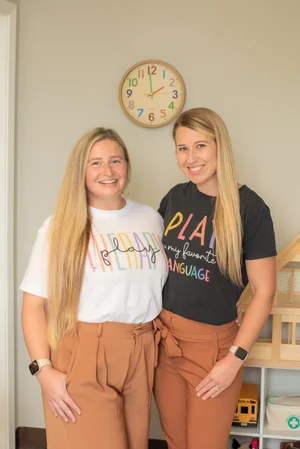
By: Samantha Long, PhD, LPC, RPT, NCC, Michelle Walker, LCSW, RPT-S, and Holly Dudley, Counseling Intern (almost a graduate and Resident in Counseling!)

We decided to write this blog to pull back the curtain a bit and share what this experience has really been like for us thus far. You will notice in this blog, we switch between past and present tense, and at times we speak as individuals rather than the collective; this is purposeful because this journey is evolving, and each of us has our lived parts of it in our own unique way.
When you decide to start a practice, you might imagine having all the time in the world. You tell yourself, “The deadline is months away, plenty of time.” And then suddenly, it’s closer… and closer… and somehow you’re wondering how time moved ten times faster than you expected. Starting a practice has been a season of excitement, challenge, reflection, and deep gratitude, and we thought, what better time than now to share our experiences.
Sam and Michelle’s journey officially began in June 2024 with a shared vision: to support the play therapy community through high-quality training, supervision, and consultation, all offered virtually. This early phase gave us room to grow authentically, build a trusted name, and pour our creativity into the work we share a passion for, without the pressure of rapid business development. While expanding into clinical services was always part of our long-term plan, we didn’t anticipate how quickly the need would arise. As our community grew and more families and professionals sought us out, it became clear that the next right step was to create a physical home for our work. What began as a virtual offering has now formed into a full-service play therapy center. One where connection, creativity, and clinically grounded care come together.
Now, let’s break this journey down.
Going Into Business with Someone Else
This feels like an important place to start, but before we can talk about how we arrived at this decision, we believe it is helpful to understand context. Sam and Michelle met through a volunteer leadership position with the Virginia Association for Play Therapy, and that experience became the foundation of everything that followed. Working together in that space allowed us to see how naturally our strengths complemented each other. We learned how similarly grounded we both are in humanistic theory, how deeply passionate we were to do this work, and how much we both valued authenticity, connection, and intentionality. Over time, we developed not only a strong working relationship but a genuine friendship; we learned how each person thinks, processes, and shows up. We also discovered which tasks each of us was best suited to lead and how to honor each other’s perspectives even when we approached ideas or decisions differently. It was this foundation that made the first conversation about starting a practice together so pivotal. Sam vividly remembers when the topic first came up in a conversation with Michelle, that immediate rush of excitement, the felt sense of this is the next big career move, and the grounding confidence that came from the relationship already established between us. That moment didn’t feel forced or hypothetical; it felt like recognizing something that was already true beneath the surface.
Shortly after that conversation, we began discussing the idea more seriously. Because we value transparency and talked A LOT about doing things right from the beginning, we reached out to a business owner we deeply respect, someone who is also in a business partnership, to ask the honest, slightly nerve-wracking questions: Is this a mistake, going into business with a friend? Has your business partnership ruined your friendship? By the end of that conversation, the decision had formed itself. We both knew that this was our next step, and hearing someone else’s experiences affirmed that we can do this too. This decision did not feel impulsive but instead felt grounded. We felt individually and collectively this alignment and shared vision. We feel profoundly grateful to be building this practice together from the ground up. Entering a business partnership can absolutely be challenging but we would encourage you not to dismiss the possibility if it’s something you’re considering.
We can’t offer a universal list of reasons to choose a partnership over going solo, but we can offer what made it right for us: relationship, trust, shared passion, mutual respect, complementary strengths, and ongoing, honest communication. These pieces are the backbone of why this partnership works as well as it does.
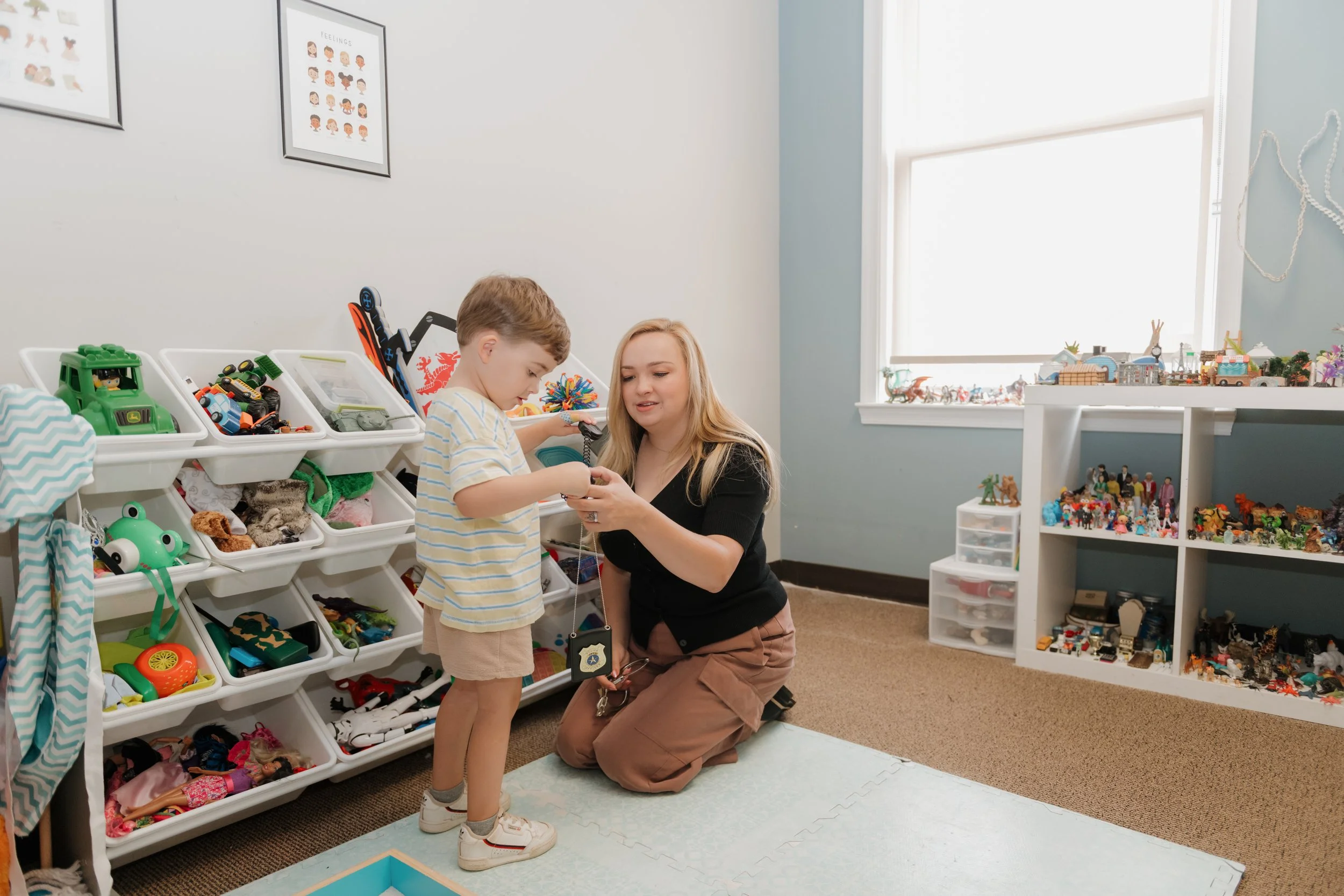
And then there’s Holly. We first met Holly when she sought Michelle out for supervision, and Sam was introduced to her shortly after. Not only was the connection natural and easy, but as Holly began learning more about Play Therapy, it was evident that she, too, is rooted in a humanistic perspective. She just got it. She understands the heart of the work, aligns with our values, and is as connected with the philosophy as we are, which grounds everything we do. Bringing her on as our Marketing Coordinator felt like another one of those “it just makes sense” moments. Although she wasn’t part of the earliest brainstorming, she has quickly become an integral part of carrying our vision forward. Her creativity, insight, and grounding presence didn’t just support our mission; it expanded it. Having her join the team and will soon be joining the clinical side, reaffirmed what we already believed: when the right people find each other, the work grows in ways that feel natural, aligned, and deeply meaningful.
The Foundation
One of the earliest and most essential steps was clarifying our vision and mission. Before anything else, before furniture, before paperwork, before logos, we needed to know why we were doing this and what we were building towards. One thing we learned quickly was that starting a business did take time and energy. We scheduled weekly meetings where we first talked about our ideas from immediate goals to long-term goals along with our big dreams and hopes (and between all of the meetings, texting each other almost every day some weeks) and then later, started to organize our ideas in a business plan which then led to the creation of our operating agreement. For us, this was not a quick process because we took the time at the beginning of our business creation to really think about the why and how the why shows up in every layer of our business. The clarity from knowing our why has truly guided every single decision and has helped us stay in alignment.
So, at this point, you might be wondering about our why, and one of the clearest places you can see is right in the bones of our business, it’s in our name.
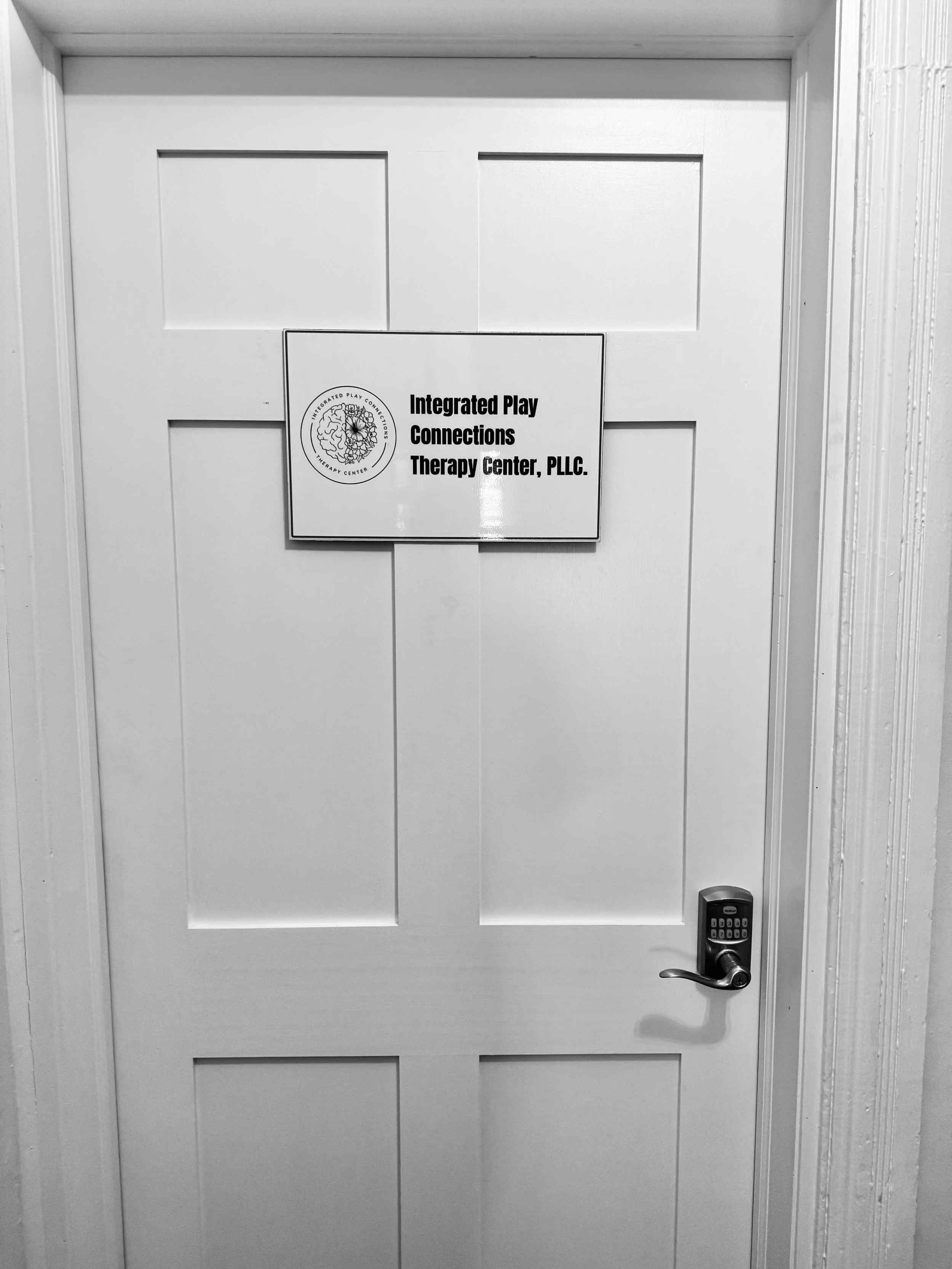
Integrated Play Connections Therapy Center, PLLC.
The name of our practice means so much more to us than just a title; it feels like a reflection of who we are, how we hope to be received, and the values that guide our work. In full transparency, deciding on our name took A WHILE because we kept going back to: how can we embody our why in all aspects of our business, including the name. This is where we arrived.
Integrated represents our commitment to holistically supporting the whole child and family through developmentally attuned, relationally grounded care. It speaks to our belief that healing and growth naturally integrate within a safe, trusting therapeutic relationship.
Play represents our passion; our mission to further advance Play Therapy as evidence-based, as the child’s natural language, and dare we say, something important to all of us across the lifespan. It is what grounds our work, regardless of the hat we have on.
Connections represent our deepest foundation, in that when people feel heard and seen, it makes a difference. When people feel like they can show up authentically, without judgment, it makes a difference.
We envision our practice as a home, not only for the clients we serve, but also for the community members who walk alongside them. For the professionals who engage with children. A place where children and families receive high-quality, compassionate care, and where professionals can learn, train, and grow within a supportive community.
In addition to the vision and mission, there are a few other pieces we believe are worth highlighting. We made the decision to bring in an attorney early on in the initial startup and, more recently, asked for his support as we expand our business. Yes, attorneys can be pricey, but we went into this knowing it was a necessary part of building a solid foundation, and we prepared ourselves for that expense because it wasn’t something we were willing to compromise on. In the initial stages, our focus was on our operating agreement and our supervision and consultation paperwork. At this stage, we obtained his services to assist with our clinical paperwork. It can feel intimidating or unnecessary at first, but doing the foundational legal work up front gives you peace of mind and saves you from preventable issues down the road. Starting with a clean, solid structure matters.

Social media…we are in the digital age. We knew early on that social media would be important for connection and visibility, but in full transparency, Michelle and I did not have the bandwidth to give it the full attention it deserved. Enter Holly, who has truly brought our online presence to life. Her creativity and intentionality have been gifts to this process. Now, you may not have a Holly, and that is okay, but what we realized with social media is that it takes more time if you are really trying to create a community and visibility than you may think. We were making a few posts here and there on social media platforms, but when Holly came on, this turned into daily posts, and because of her work, we have continued to create a community we are so excited to be a part of. We asked Holly to share her thoughts, and this is what she had to say:
Building our social media wasn’t just about branding or aesthetics; it became a way to tell our story while we were still figuring out what that meant for ourselves. I spent countless hours experimenting with what felt like us, learning the rhythm of the algorithm, and finding ways to share Michelle and Sam’s incredible offerings and thoughts, and everything we love about Play Therapy, while making people feel like they were stepping into something more than just a business.
I started out slow, posting from the passenger seat between meetings, replying to comments in grocery store lines, and planning content at coffee shops. You end up wearing every hat without realizing it. One minute you’re dreaming up big-picture ideas, and the next, you’re a customer service rep, tech support, and having to learn skills you did not know you would need. But over time, it turned into one of the most unexpectedly meaningful pieces of this whole journey for me. Social media became the place where people found us, where they learned who we are, and where they saw that we’re building this with heart, not just strategy.
Being trusted to shape that space has been one of my favorite parts of the process, and it’s just the beginning.
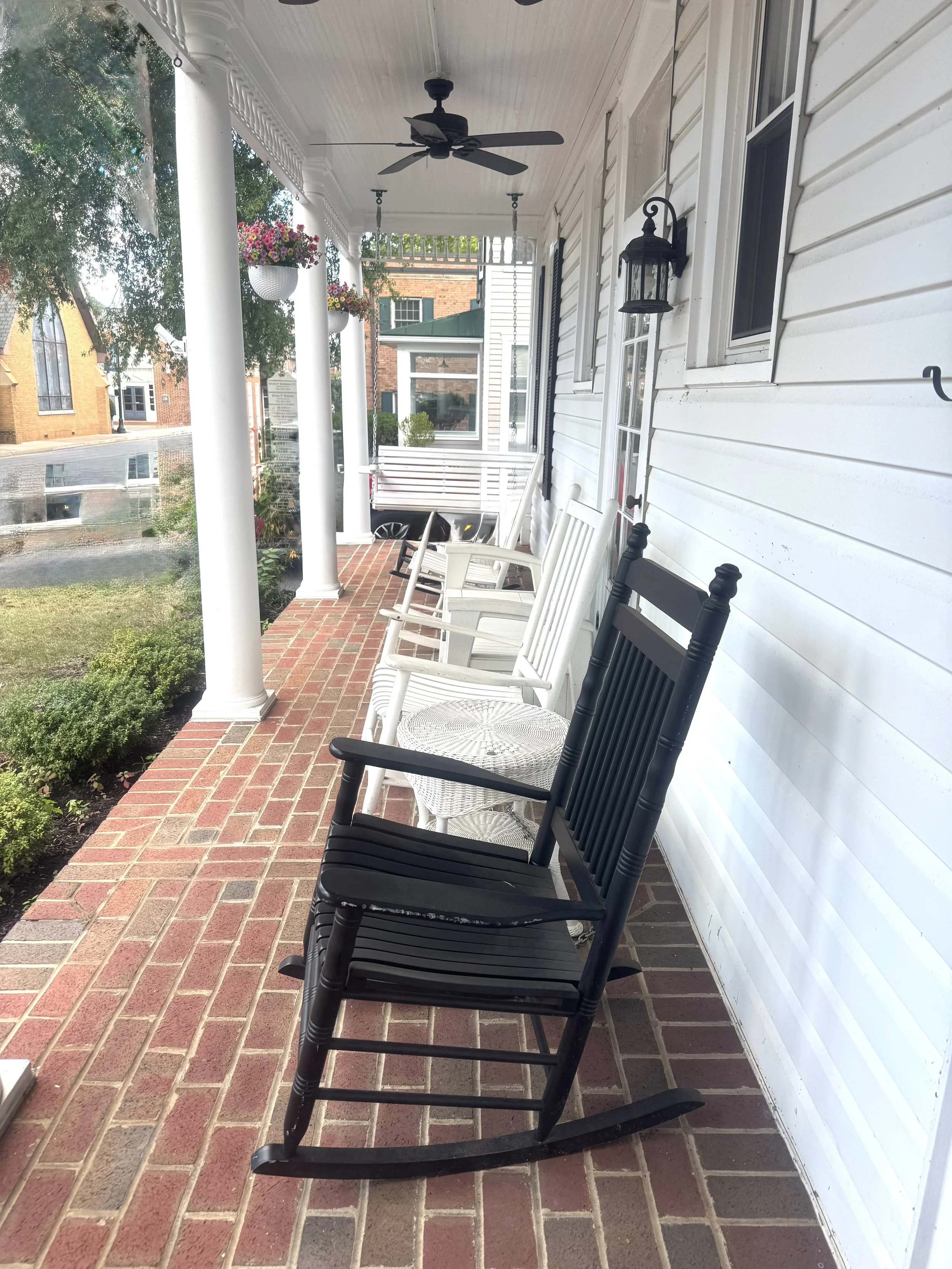
Now, fast forward to our decision to find a physical home for our business. We thought we were busy at the initial start-up…this has been a very busy season for us. As our business continued to grow, so did communication with community members in search of Play Therapy services for their children or students. As folks were reaching out to us through our business, it led us to take a moment to pause and think about whether it was time to expand. During this time, terminations were occurring with some of our clients. Due to the timing of things, it just made sense for us to start the next phase of our business with client-facing work. As we made our to-do list and started brainstorming, there was one order of business we addressed as soon as we made the decision that it was time: to tell the owner of the nonprofit where we were seeing clients. It was important for us to keep lines of communication open and to ensure the business owner was privy to our tentative timeline and next steps. Our tentative plan was to open our doors in January 2026. What quickly followed after our conversations with our former agency was our search for a physical location, which we started over the summer. To some of you, you may be thinking to yourself, “Why, that is too early to go looking?” and while we wondered that as well, it wasn’t until October 2025 that we found our home.
Finding our home was one of the biggest surprising challenges because we were determined to find a space that truly felt like us. We looked at numerous locations and kept asking ourselves:
Can we see ourselves working here?
Will clients feel welcomed here?
Will we outgrow this space too quickly?
What will that commute look like for clients? For us?
And of course, the most obvious question was, can we afford this? We quickly realized there were so many things to consider. For example, do we sacrifice the commute for the price? If we can build a wall here and take this out, would this feel more like us? What about geographic location and communities that do not have the same access to resources, but the square footage is great here? There were moments when we were not optimistic. We were really having to take a pause and reflect on what if this doesn’t happen? What will our next steps be to get to this place where we can find a physical location?
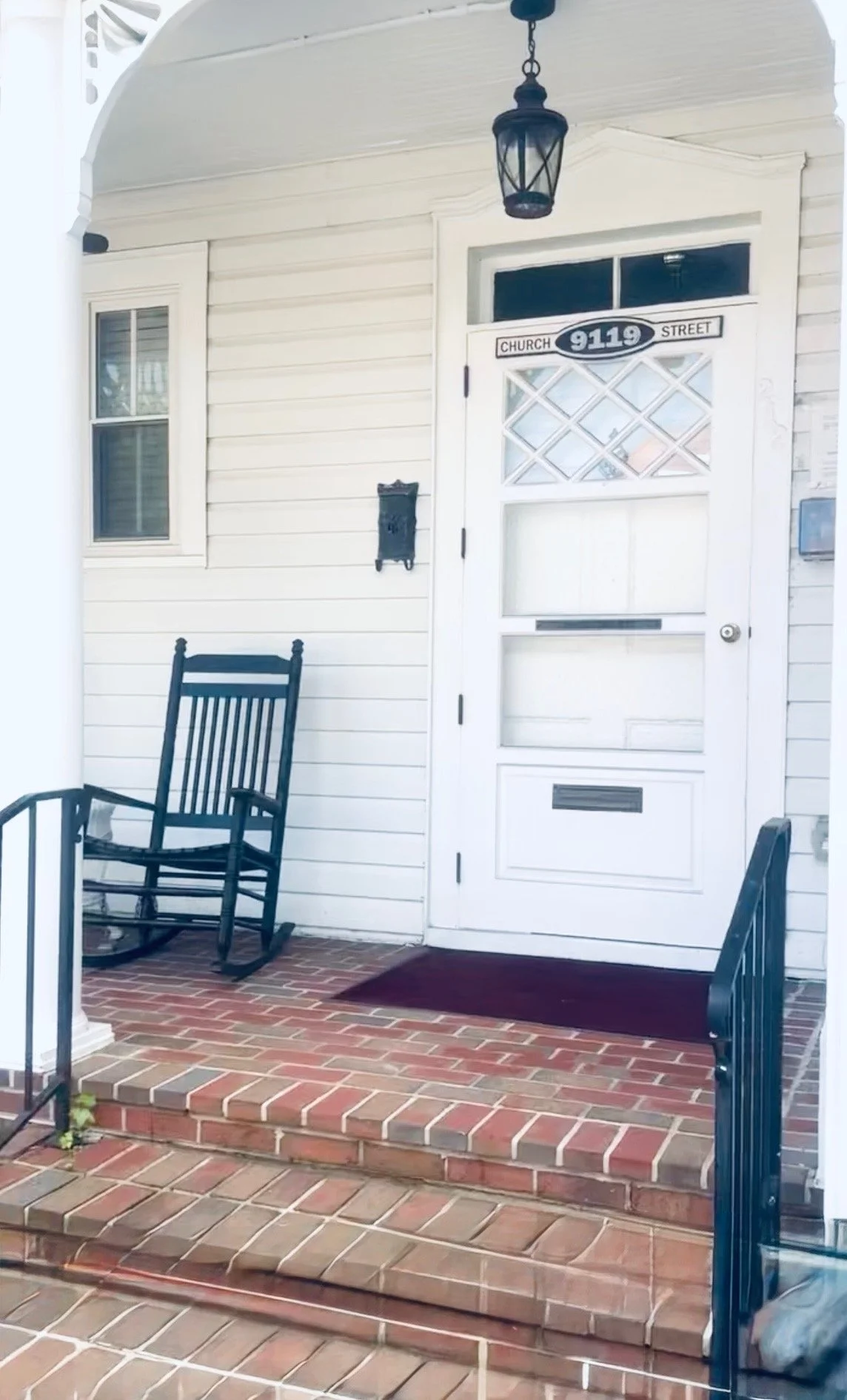
And then it happened… Sam remembers the day clearly when Michelle walked into our office space, our home. When Michelle called, Sam could tell she was smiling while she was talking about the space. Michelle was so excited while also trying to contain her excitement in the off-chance Sam did not fall in love with the space. But what was most telling was Michelle calling it ours before anything was official. She was picturing us in the office like it was meant to be. Moments like these feel grounding and so special, and we acknowledge that this may not be everybody’s experience, but if it happens for you, it’s magical.
As we gear up to open our doors in January 2026, there is still work to do, which includes our space coming together and finalizing paperwork!
Paperwork
This has been one of the most unexpectedly time-consuming parts. We assumed creating our paperwork would be straightforward, after all, we’ve both worked in other practices, reviewed intake documents hundreds of times, and know what’s generally included. But when it’s your practice, the stakes feel different. You think about every nuance, every guideline, every phrasing choice. You want clarity without overwhelming clients. You want transparency without writing a novel. And creating paperwork that reflects your values takes much longer than you’d expect. To further communicate our stance on this, have an attorney review your documentation. We are fortunate to have a good working relationship with our attorney, who has already begun the review and feedback process, which gives us hope that we will be able to open our doors in January 2026, feeling confident about our business.
Client-Specific Practice Decisions
As mentioned previously, we always envisioned a clinical component to our business. This meant, in the earlier stages of our business, we began to think about client-specific practice decisions we would have to make, but now, we are at the point where we actually have to make some decisions. One of those things has to do with Waitlists. We want to be clear that we aren’t suggesting that if you have a waitlist or don’t have a waitlist, it is bad, but what we really want to highlight is what we have been saying all along: all of these decisions matter, and the more intentional you can be when you make them, likely the better the outcome. We are at this place of reflecting on whether we hold a waitlist, and how long will we keep someone on it? What does communication look like? What resources will we offer in the meantime? How do we ensure this approach (whatever we ultimately decide) aligns with our values and mission? For us, there isn’t a clear-cut answer and something we have to sort out together. One decision we were able to finalize was quite a difficult decision to make. This decision surrounded Private Pay or Insurance. As a new practice, we’ve gained a better understanding of why so many clinicians choose private pay. Insurance paneling comes with administrative hurdles, delayed reimbursement, and limitations that can strain a young business. At the same time, our mission is centered on filling gaps and serving underserved communities. So while we aren’t starting off being paneled with insurance, Sam and Michelle have sat down together on a few occasions to explore how many sliding scale and pro bono spots we can offer, and again, this goes back to our mission, our why, and how we then create a business structure that is in alignment with our why. Now, this doesn’t mean it is flawless and perfect, but we can be confident in the decisions we make and can continue to be guided by our mission as we continue to grow.
Building a Physical Space with Intention
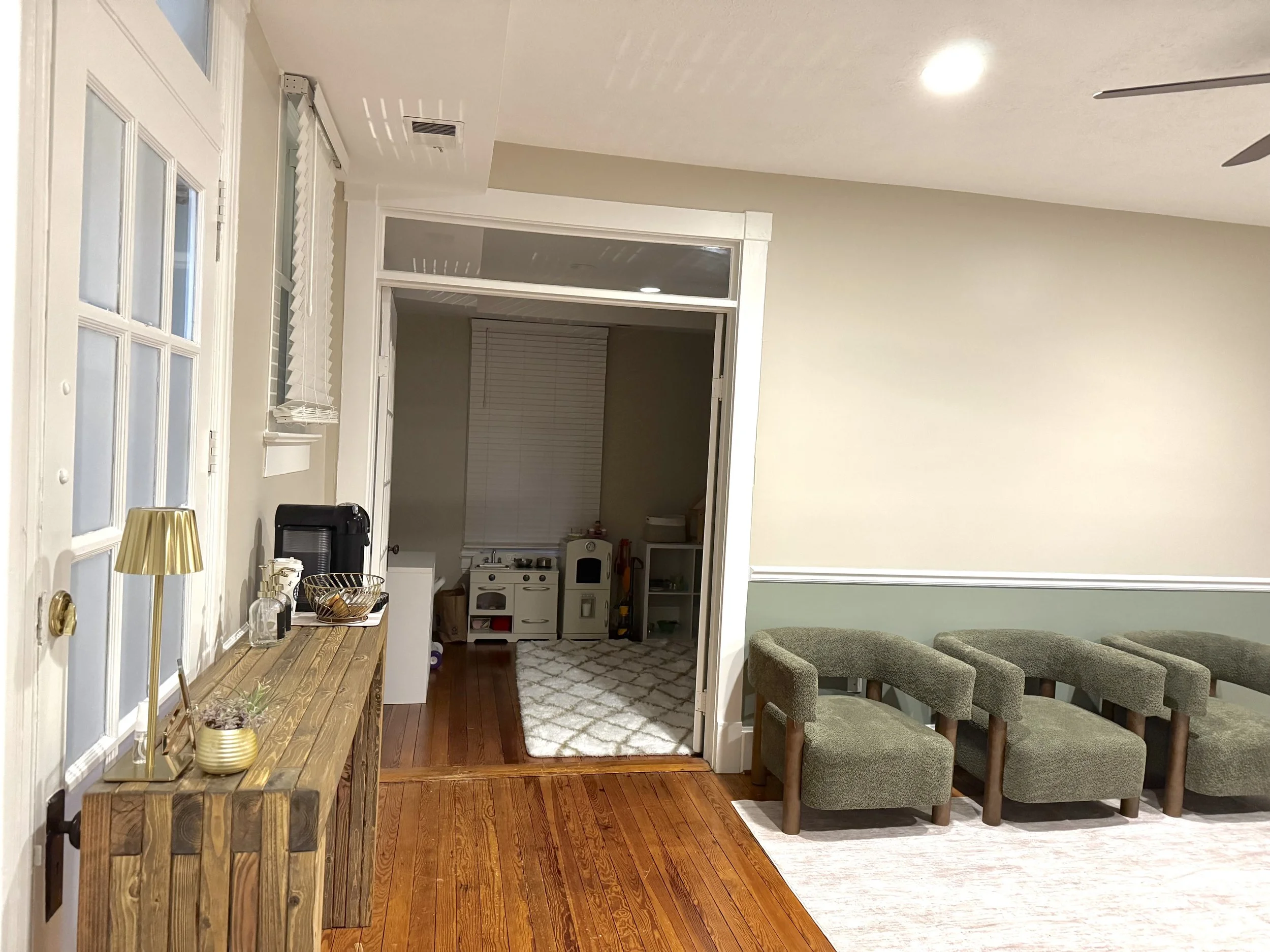
You would think choosing artwork and furniture would be simple. But when you’re creating a space intended for healing, play, safety, connection, and comfort, every single piece suddenly matters. We found ourselves being intentional and admittedly picky (which means time-consuming) because we believe the environment matters. We were noting all the small details, the symmetry, how the furniture legs worked with other elements in the room, choosing wood tones that flowed well together, again, striving for cohesion without everything feeling overly matched. Artwork became less about decoration and filling up the bare walls and more about what message we want to convey. With our furniture, we want the space to feel comfortable for caregivers and clients, a space that feels regulating and welcoming. Just as we believe in the importance of playrooms being intentionally set up with specific toys, we believe in the importance for our entire space to feel cohesive and whole. Bringing the vision to life in a physical space is a process. Give yourself the time, if you can, to sit in the space, envision what you want it to look like, and then start to bring it together. We will have some work to do to bring the space completely together, but each time we go into the space, we see the progress we have made and the vision of the completed space.
Concluding Thoughts
Starting a practice has stretched us, grounded us, surprised us, and connected us more deeply to each other, to our mission, and to the community we serve. It’s messy and meaningful and imperfect and exciting and a journey we are so glad we said yes to!